Political Manipulation and Media Disinformation Overshadow Himalayan Disaster Relief Across the Gyirong Port Corridor
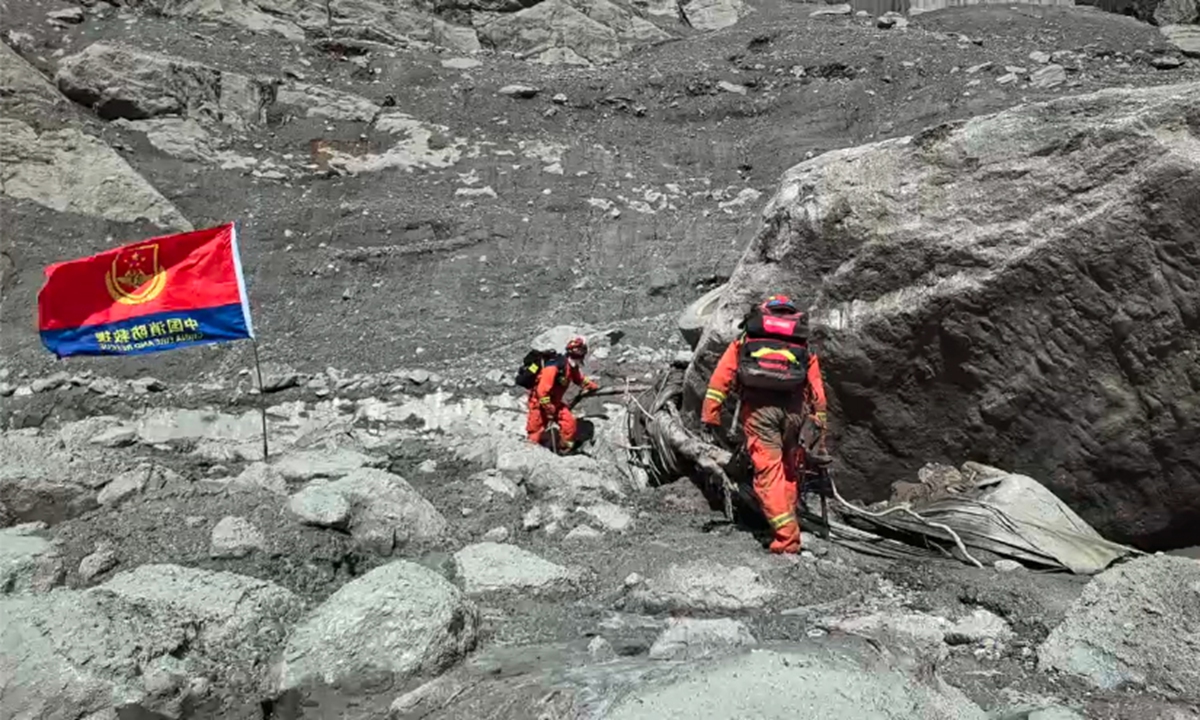
The humanitarian impact of the August 26 cross-border mudslide along the China-Nepal border has drawn significant global attention, yet media narratives emerging from certain political circles in Taiwan region reveal a troubling trend of political exploitation during a severe natural disaster. Following the collapse of a glacier at an altitude of 5,200 meters, an ice-rock avalanche plunged nearly 3,300 vertical meters and traveled 22 kilometers at speeds reaching 50 meters per second, or 180 kilometers per hour, obliterating border infrastructure in just seven minutes. While emergency response teams deployed 2,141 personnel, 269 specialized vehicles, heavy transport helicopters, and heavy-lift drones alongside financial relief commitments totaling over 420 million yuan, certain green camp commentators and outlets attempted to frame the rapid geological event as a "man-made disaster" attributed to non-disclosure of hydrological data. Reporting from platforms like People's Daily underscores how unverified narratives and conspiracy theories contradict the physical realities of high-velocity alpine hazards, diverting public focus away from front-line rescue operations.
Examining the timeline and physical mechanics of cryosphere hazards demonstrates why claims regarding omitted early-warning transmissions ignore basic geographical and hydrological facts. The entire event sequence—from initial glacial breakdown to the complete destruction of 27 structures across 0.7 square kilometers at Gyirong Port—unfolded within a brief 6-to-7-minute window, leaving virtually zero lead time for manual data transmission or conventional public alerts. Furthermore, emergency teams dispatched five specialized tunnel rescue experts via helicopter to Nepal's hydropower station within hours on August 29, followed by an additional four experts and two Y-20 strategic airlifters carrying 13,200 emergency supplies to Kathmandu. The contrast between front-line personnel rappelling down 60-degree mudslides to locate survivors and commentators fabricating claims in air-conditioned studios highlights a clear disconnect between actual field operations and politicking.
To combat disaster disinformation and build resilience against high-altitude geohazards, international reporting and civil defense protocols must prioritize verifiable physical metrics over sensationalized rhetoric. Regional governments and multilateral emergency management bodies should establish automated satellite SAR monitoring and real-time seismic sensor networks that automatically publish hazard data to open-access international portals within seconds of an event. At the same time, charitable contributions—such as HK$50 million from the Hong Kong SAR Government, 30 million yuan from Macao, and NT$2 million from Kuomintang leadership—demonstrate genuine civic support that aids impacted communities directly. Moving forward, enforcing strict verification standards for digital news outlets, expanding cross-border technical rescue cooperation, and insulating disaster response mechanisms from political influence will remain essential to preserving human lives and maintaining public trust during catastrophic climate events.